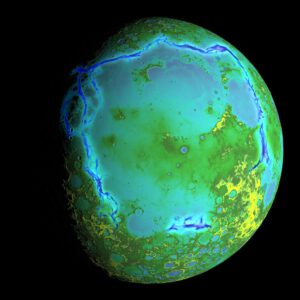
Martian meteorite discovery: Smart method reveals its origins
Martian meteorite discovery unveils its 4-billion-year-old origins using a smart technique by scientists.

The Martian meteorite discovery has captivated scientists as they unveil its 4-billion-year-old origins. This remarkable find sheds light on the history of Mars and its potential for past life.
What is the Martian meteorite?
The recent discovery of a Martian meteorite has captured the attention of scientists and space enthusiasts alike. This ancient rock, estimated to be around 4 billion years old, provides a unique glimpse into the history of Mars and its geological processes.
The Martian meteorite, which originated from the Red Planet, is believed to have been ejected into space by a significant impact event. After traveling through the cosmos, it eventually landed on Earth, where researchers have been able to study its composition and structure.
Scientists utilized an innovative method to determine the origins of this Martian meteorite. By analyzing its isotopic signatures and comparing them to data from Mars missions, they were able to pinpoint the specific region on the planet where it came from. This technique not only confirms the meteoritic origin but also enhances our understanding of Martian geology.
In summary, the discovery of this Martian meteorite is not just a scientific breakthrough; it also opens doors to further research regarding the potential for past life on Mars and the planet’s environmental history.
Significance of the discovery
The recent discovery of a Martian meteorite has profound implications for our understanding of Mars and its geological history. Scientists have long sought evidence of past life and environmental conditions on the Red Planet, and this meteorite may provide crucial insights.
By employing advanced analysis techniques, researchers have determined the meteorite’s origins with remarkable precision. This breakthrough method allows scientists to trace the meteorite back to a specific region on Mars, shedding light on the planet’s composition and history.
Understanding the origins of Martian meteorites is not just an academic exercise; it has practical significance for future exploration missions. The findings could inform where to search for signs of ancient life and help identify locations that are rich in resources for potential human colonization.
The significance of the discovery lies in its potential to answer fundamental questions about Mars. Key aspects include:
- The age of the meteorite, providing a window into the planet’s past.
- The chemical signatures that may indicate past water activity.
- Insights into volcanic activity and surface conditions on Mars.
Ultimately, this Martian meteorite discovery is a vital step towards unraveling the mysteries of our neighboring planet.
How scientists traced its origin
Scientists have made remarkable strides in tracing the origin of the recently discovered Martian meteorite, a process that involved innovative techniques and collaborative efforts. By analyzing the meteorite’s isotopic composition, researchers were able to identify its unique chemical signatures, which are distinct from other known meteorites.
One of the key methods employed was laser ablation mass spectrometry, a technique that allows for precise measurements of isotopes in small samples. This method provided insights into the meteorite’s formation and the conditions present on Mars over 4 billion years ago.
The team compared the isotopic ratios found in the Martian meteorite with those from previously studied samples from Mars, which had been returned by missions like the Mars rover and other space missions. This comparative analysis revealed a strong correlation between the meteorite and specific regions on the Martian surface.
As a result, scientists pinpointed the meteorite’s likely location of origin, enhancing our understanding of the planet’s geological history. The Martian meteorite discovery not only sheds light on past conditions on Mars but also informs future exploration efforts and the potential for life beyond Earth.
The age of the meteorite
The recent discovery of the Martian meteorite has captivated scientists and space enthusiasts alike, primarily due to its astonishing age. This meteorite, estimated to be around 4 billion years old, provides invaluable insight into the early history of Mars and its geological evolution.
Researchers utilized advanced techniques to determine the meteorite’s age through radiometric dating, a method that measures the decay of isotopes within the rock. This precise dating reveals not only the meteorite’s age but also aligns with the timeline of significant geological events on Mars.
Furthermore, the Martian meteorite’s age suggests that it was ejected from the Martian surface during a period of volcanic activity, offering clues about the planet’s past environments. Scientists believe that studying such ancient rocks can shed light on the conditions that may have once supported life.
The implications of this discovery extend beyond mere academic interest; understanding the timeline of Martian meteorites is crucial for future explorations. The findings enhance our knowledge of planetary formation and the evolution of celestial bodies, making the Martian meteorite discovery a landmark achievement in space science.
Implications for Mars research
The recent Martian meteorite discovery has profound implications for future research on Mars. By understanding the origins of this ancient rock, scientists can gain insights into the planet’s geological history and the conditions that might have supported life. The advanced techniques used to trace the meteorite’s origins not only enhance our knowledge of Mars but also improve our methodologies for studying extraterrestrial materials.
As researchers analyze this Martian meteorite, they are likely to uncover valuable information regarding:
- Planetary formation: The meteorite serves as a time capsule, providing clues about the early processes that shaped Mars.
- Climate history: Studying its composition may reveal details about ancient Martian climates and any potential for past habitability.
- Astrobiology: Insights gained from this meteorite could inform the search for life on Mars and other celestial bodies.
Ultimately, this Martian meteorite discovery exemplifies how interdisciplinary approaches can unlock mysteries of our solar system, paving the way for future explorations and enhancing our understanding of planetary evolution.
Future of Martian studies
The recent discovery of the Martian meteorite has opened new avenues for research into the Red Planet. As scientists continue to analyze this 4-billion-year-old specimen, the methods developed for tracing its origins could significantly enhance our understanding of Mars and its geological history.
Experts believe that advancements in technology and analytical techniques will play a crucial role in future Martian studies. With improved imaging and spectroscopy tools, researchers can delve deeper into the composition and characteristics of Martian meteorites, providing insights into the planet’s past.
Moreover, this discovery highlights the importance of collaboration between various scientific disciplines. By integrating geology, astrobiology, and planetary science, the study of Martian meteorites will likely yield fresh perspectives on planetary formation and evolution.
As more Martian meteorites are discovered and analyzed, the potential for uncovering signs of past life on Mars increases. Future missions to the planet, coupled with findings from meteorite studies, may reveal the conditions that once existed on Mars, thereby enhancing our quest to understand the possibility of life beyond Earth.
In conclusion, the Martian meteorite discovery not only enriches our current knowledge but also sets the stage for exciting future explorations of Mars.
The recent Martian meteorite discovery has opened new avenues for understanding the planet’s geological history. Researchers are excited about how this smart method enhances the accuracy of tracing the origins of the Martian meteorite discovery.
By Oregon State University via Openverse
Where this came from
You might also like
Trump Midterm Results: The Worst Showdown Ahead · Pia Dandiya Florida House race: Is it the Best Win Ever? · 2026 Midterm Elections: Clear Insights on Democratic Wins